


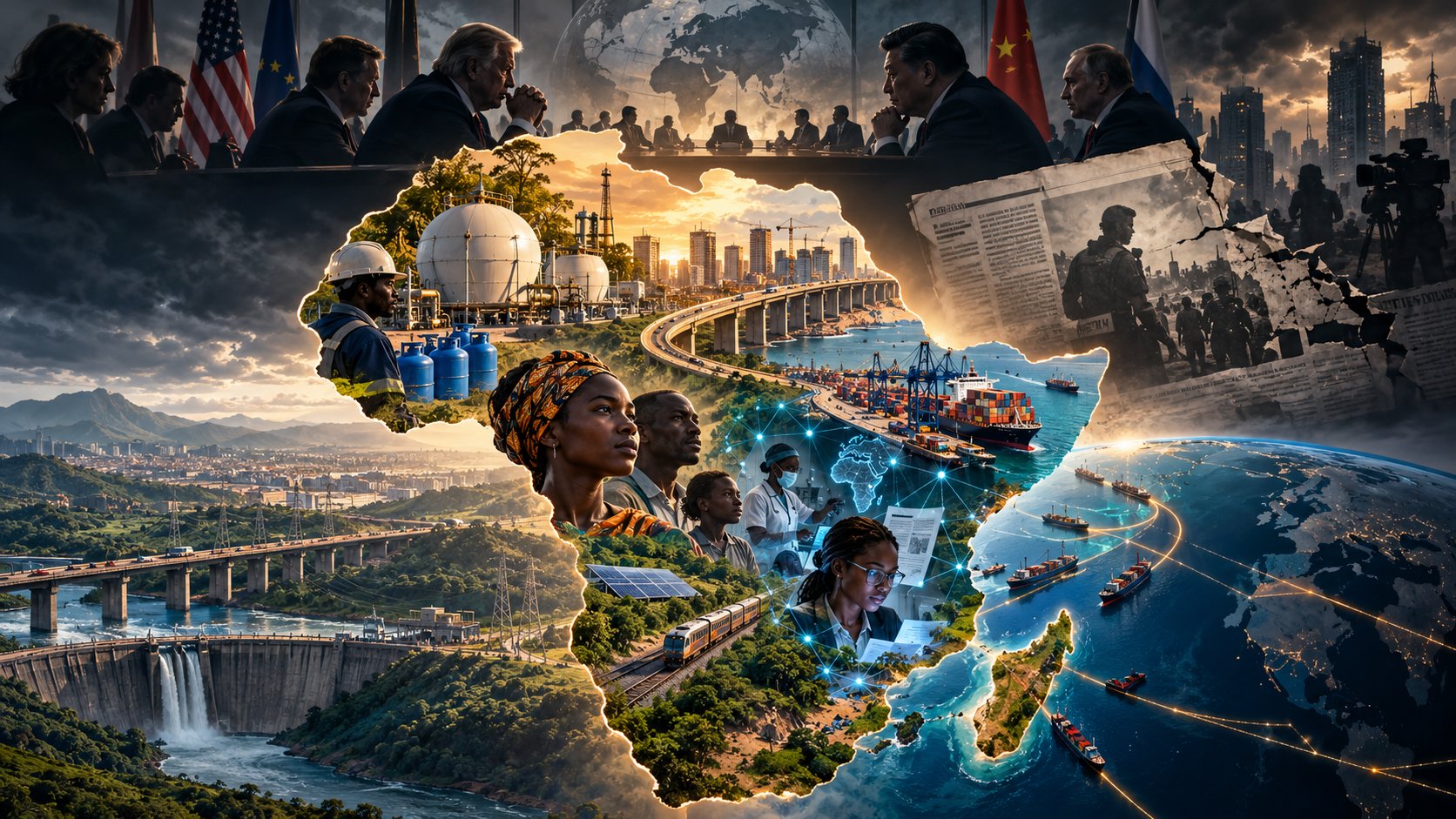
Independent Media Under Pressure, African Strategic Choices, and the Complex Tensions of a Multipolar World
Press Freedom in Retreat: The Closure of Novaya Gazeta
The most prominent thread running through the digest is the forced closure of Novaya Gazeta, Russia’s leading independent newspaper. After surviving decades of government harassment—including office evictions, registration withdrawals, website blockages, and criminal prosecutions against its journalists—the paper announced it was ceasing operations after 33 years. The office eviction in Moscow the day prior, together with the public gathering of readers outside the premises, reflects both the heightened pressure on dissenting voices and the durability of public appetite for independent reporting. Notably, no single rationale for the closure is detailed in the digest, though the litany of official and extralegal measures listed paints a picture of systematic constriction designed to make journalistic persistence untenable. Contributions from former staffers and editor Sergey Sokolov—while not independently verifiable here—evoke a sense of historical weight and enduring threat; several Novaya journalists were reportedly killed in the course of their work, serving as a bleak reminder that press freedom in Russia remains a dangerous calling.
The broad arc visible here is not simply one of state repression but of how domestic media closures are symptomatic of wider global contestation over narratives and legitimacy. While the digest offers no evidence of direct foreign influence or coordination, the loss of such outlets carries implications for international understanding of Russian realities at a time when critical journalistic voices are increasingly at risk in multiple geographies.
Diplomatic Tensions at the G20: The Limits of Engagement
Diplomatic friction at the Atlanta G20 foreign ministers’ summit is highlighted by the cancellation of the group photo after several ministers refused to pose with Russia’s Sergey Lavrov. This symbolic act, reported as part of an ongoing pattern, demonstrates both the durability of Russia’s isolation within prominent multilateral institutions and the challenges of maintaining even basic diplomatic rituals in an era of sharpened geopolitical divides.
The refusal to appear alongside Lavrov and the subsequent decision to avoid the photo altogether underline the resilience of mainstream Western–aligned positions, especially on Russia’s continued international role, and serve as a visible signal to domestic and international audiences. However, beyond the optics, the digest does not report any substantive impact on the forum’s proceedings or wider G20 policy prospects.
Africa’s Strategic Openings: Energy, Security, and Fact-Checking
Energy Policy: The LPG Opportunity
The digest spotlights Africa’s continent-wide opportunity in downstream energy, particularly around liquefied petroleum gas (LPG). As summarised from AllAfrica, a new article frames LPG as a defining investment trajectory for the next two decades, with an active window for infrastructure and distribution buildout. While the source frames rapid action as imperative, there is no indication in the digest of specific policy proposals, financial commitments, or cross-border initiatives in train. Nevertheless, the identification of LPG as an economic and environmental game-changer signals both continental ambition and the pressures of global energy transition debates, especially given Africa’s relative underdevelopment in cleaner fuel adoption. Yet, the reporting does not clarify if external actors—whether Western, BRICS, or Gulf financiers—are significant players in this domain, or what complications may arise as African governments and firms attempt to redefine their participation in the global downstream industry.
Security and Public Health: A Mixed Picture
Several items draw attention to Africa’s ongoing domestic challenges. On public health, South Africa confronts an outbreak of African horse sickness, prompting rapid quarantine and movement restrictions to stave off crisis in the equine population. In Kenya, careful fact-checking by Africa Check has effectively debunked circulating claims of an Ebola lockdown and the death of a prominent pastor, even as 46 contacts are reportedly due for discharge from Ebola quarantine in the coming days. These responses collectively indicate a maturing public health and information ecosystem, wherein authorities and civil society actors prioritise both coordinated action and countering misinformation—a necessity in regions historically vulnerable to both actual pandemics and viral rumour.
On the security front, Nigeria continues to grapple with lethal violence in Plateau state, with gunmen once again breaching curfew restrictions and killing four residents. The attack, though lacking details on perpetrators or broader context, is a stark reminder of the enduring insecurity facing parts of the region, despite routine security measures. Elsewhere, Malawi has been shaken by the assault and hospitalisation of Egypt’s deputy ambassador—an event now under police investigation and contributing to concerns about the safety of foreign representatives.
Infrastructure, Politics, and Contested Development
The political contest over Chinese-funded overpasses in Liberia demonstrates the symbolic heft infrastructural investments carry in Africa’s electoral theatre. As rival parties contest credit for the visible projects, the infrastructure itself becomes a proxy for broader debates over political legitimacy and the role of external actors (in this case, China) in domestic development. The episode, while lacking evidence of multipolar rivalry per se, nevertheless illustrates the ways in which outside involvement is increasingly woven into the fabric of African political competition.
State Capacity and Information Integrity
The actions of the South African Police Service (SAPS) in preparing for the impending local government elections, including operational readiness and the activation of specialised units, point to the continuing centrality of state security structures in managing democratic processes. The credibility of policing and the effectiveness of election security will have tangible implications for public confidence in the electoral process, especially in a region still grappling with uneven democratic consolidation.
Meanwhile, Africa Check’s persistent debunking of viral misinformation in Kenya testifies to the rising importance of local fact-checkers as stabilisers within the information ecosystem. As the continent becomes ever more networked, the rapidity of digital rumour circulation has raised the stakes for information integrity during public health and political events. While the reports assessed here highlight successful interventions, the durability and depth of such progress will depend on continued commitment from both national authorities and independent actors.
Maritime Access and Regional Diplomacy: Ethiopia’s Calculated Overtures
Among notable African developments, Ethiopia’s navy commander has publicly reiterated that the country’s “return to a sea port is inevitable,” linking this ambition to the necessity for regional dialogue and cooperation on maritime security. This pronouncement, as reported, suggests an emphasis on negotiation and engagement with neighbouring states over unilateralism, echoing broader patterns of regional integration and competition in the Horn of Africa. However, the digest does not provide additional detail on which port(s) or countries are being targeted for negotiation, or the likely scale and timeline of Ethiopia’s maritime strategy. The framing of sea access as a national imperative is noteworthy, given Ethiopia’s longstanding landlocked status since the independence of Eritrea, and overlaps with wider African efforts to enhance regional infrastructure and security linkages.
Multipolarity and BRICS: Fissures, Evidence, and Ambiguities
This digest reflects the complexities underlying the oft-cited trend towards global multipolarity. The Atlanta G20 episode, featuring symbolic Western resistance to Russian participation, reinforces that despite theoretical talk of a shifting order, structures of partial exclusion and ostracism remain intact in key fora. Russia’s internal crackdown on Novaya Gazeta does not itself advance a multipolar narrative; rather it accentuates the fraught consequences of internal repression amid an unfinished contest for narrative legitimacy both domestically and abroad.
On the African front, tangible evidence for concerted multipolar strategy remains sparse in today’s summaries. The LPG opportunity is presented in primarily technocratic and national-developmental terms, with no explicit reference to BRICS or alternative power alignments. Similarly, Ethiopia’s approach to maritime security invokes regional, rather than global, realignment logics. The Liberia infrastructure dispute, while involving a Chinese-funded project, is more about domestic credit-claiming than systemic rivalry. No substantial evidence emerges to suggest increasing BRICS influence or cohesiveness today; nor are the tensions within BRICS or between African governments and their external partners exposed in any significant way in this digest’s coverage.
Implications for Africa: Pragmatism Amidst Opportunity and Challenge
African agency is present, if unevenly expressed. Policymakers are weighing new energy options and pursuing cooperative regional security approaches. Civil society is incrementally strengthening its capacity to confront misinformation. Yet, persistent vulnerabilities—from insecurity to infrastructural contestation and the fragility of democratic processes—continue to shape the order of the day. The multiplicity of external influences is apparent, but the stories featured here centre on domestic agency and regional dialogue rather than on Africa as a simple arena for external power competition. Where global contestation does intrude, it tends to be in the background rather than as the primary driver of events.
Conclusion: Fractured Orders, Enduring Struggles
Today’s developments capture a world in complex tension: repressive measures against media at the centre of global contestation, persistent diplomatic divides even in multilateral settings, and African actors charting their course through the intertwined imperatives of security, development, and information reliability. The theory of multipolarity remains compelling—yet, as today’s evidence amply demonstrates, its real-world contours are variable and often ambiguous. Amidst grand narratives, the granular struggles for safety, legitimacy, and voice remain as urgent as ever.
Editorial source note: This analysis is based on the aggregated summaries in Freenet Africa Daily News Digest — 31 October 2026. The underlying reports have not been independently verified for this analysis.