26 October–1 November 2026
Press Suppression and International Tensions Mark a Week of Escalating Strains
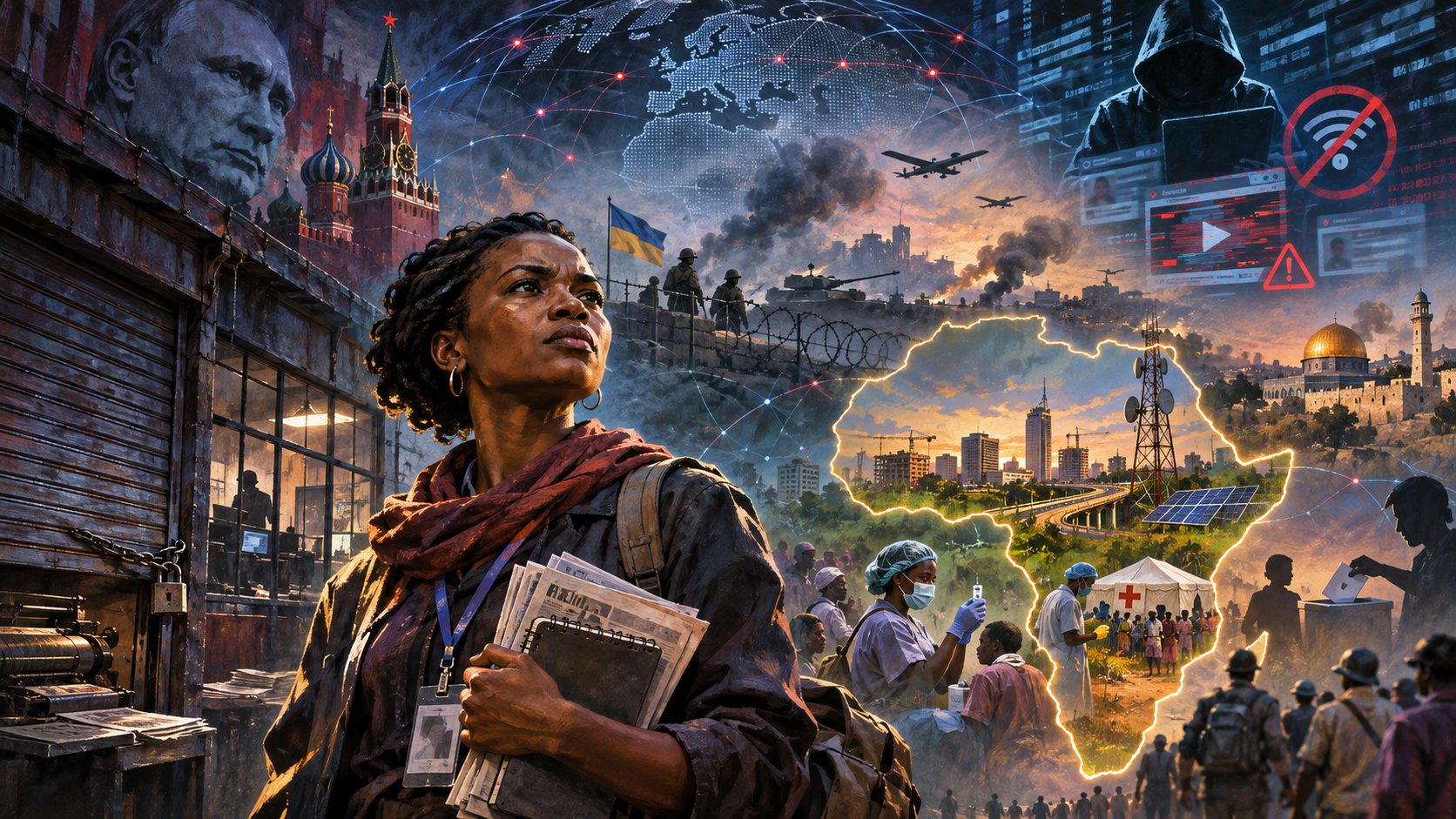
The final days of October 2026 saw a deepening of challenges to independent journalism in Russia, heightened global security anxieties, and renewed violence across several regions. Developments spanned the forced closure of long-standing media outlets, continued conflicts in the Middle East and Ukraine, and the intertwining of diplomatic, military, and economic crises. Countries in Africa and beyond also grappled with public health worries, misinformation, and political contestation, reflecting a tumultuous global environment.
Independent Journalism Under Pressure
The week saw a significant blow to independent journalism in Russia. After 33 years of reporting, Novaya Gazeta—the country’s flagship investigative outlet—was forced to close. The final eviction from its Moscow newsroom on Potapovsky Lane ended nearly three decades of continuous presence. Former staff and media commentators noted the outlet’s legacy of critical reporting and its role as a voice for stories often suppressed elsewhere in Russia. This closure follows sustained pressure through registration revocations, court cases, and official labelling as a ‘foreign agent’—part of a broader trend that has left independent Russian media outlets under existential threat. Meanwhile, other independent news organizations such as Holod cited severe funding shortages, raising fears of further shrinkage in Russia’s already constrained media environment.
Suppression of Dissent and Political Repression
Repression in Russia stretched beyond journalism. Human rights monitors reported at least 69 deaths among those subjected to political persecution since the 2022 escalation in Ukraine. Treason charges and prosecutions continued, as illustrated by the case against a 76-year-old former regional Communist leader accused of ties to Ukrainian intelligence. Authorities similarly targeted online content, with Russia’s media regulator blocking popular AI-generated music and tightening efforts to control VPN use and restrict foreign internet traffic. At the same time, Russia’s anti-LGBT campaign saw individuals penalized for even perceived support, sometimes ensnaring those who were themselves opposed to LGBT rights—highlighting the indiscriminate enforcement of censorship laws.
Security Concerns and War
Armed conflict and security threats dominated international headlines this week. The Middle East remained a flashpoint, with significant civilian casualties in Gaza and Yemen from Israeli and Saudi airstrikes, respectively. Hezbollah reiterated its refusal to disarm, maintaining a stance of resistance to Israeli military presence in Lebanon. Along the Israel-Lebanon border, troop build-ups and cross-border attacks fueled fears of a wider confrontation.
Iran remains at the core of regional tensions. Iranian officials signaled readiness for both military defense and diplomatic talks amid speculation of a potential US-Israeli attack. The US reportedly sent an additional Patriot missile system to Israel and continues to consider military options, while Pentagon estimates of the Iran war’s costs surpassed $47 billion, with actual costs likely higher.
The Russia-Ukraine conflict persisted with large-scale drone attacks, ongoing shelling, and reports of humanitarian corridors opening under uneasy ceasefires for civilians in occupied regions. Ukraine’s leadership signaled openness to direct territorial talks with Russia, even as both sides remained engaged in active hostilities. Meanwhile, European states, led by France, announced plans for coordinated nuclear deterrence efforts against perceived Russian threats—underscoring hardening security postures and mutual warnings.
Diplomatic Friction and Legal Measures
Multilateral and bilateral diplomatic ties exhibited significant strains. At the G20 foreign ministers’ gathering, several delegates refused to pose with Russia’s foreign minister, leading to the cancellation of the usual group photograph—a symbolic act reflective of Russia’s international isolation. The US State Department advanced a major arms sale to bolster Ukraine’s missile defenses, while discussions in Washington considered easing some sanctions on Russian sovereign investment funds. However, moments of rare coordination appeared, such as the joint humanitarian mission for civilians in Russian-occupied Ukrainian territory.
Elsewhere, an incident saw the US Embassy in Moscow issue a security warning over a reported mass casualty threat at a high-profile museum, which Russian authorities acknowledged as credible. In Poland, the suspension of its constitutional court chief signaled a deepening standoff between the government and judiciary, adding to concerns about rule of law in the country.
Pressures in the Digital Sphere
Russia’s tightening internet controls included proposals to route all foreign internet traffic through state-filtered infrastructure—an effort to limit circumvention via VPNs. Meanwhile, an ironic twist was reported in the development of VPN tools to evade Russian website blocks, with the main programmer being a former employee of the country’s internet censor agency. Hacking incidents linked to Russia targeted critical infrastructure in Western countries, according to reports, causing physical damage to industry and utilities.
Africa in the Spotlight: Development and Misinformation
The African continent faced its own mix of development opportunities and challenges. Tanzania reported a major reduction in poverty amid significant population growth, while large bond offerings by the African Development Bank and the closing of major venture funding rounds in tech signaled investor optimism. Nigeria and Uganda pursued strategies to attract tourism and investment, and infrastructure projects sparked political contests in Liberia.
However, misinformation and public health concerns were also prominent. Fact-checkers in Kenya debunked viral rumors regarding Ebola lockdowns and the death of a religious figure, underlining the importance of credible information during outbreaks. South Africa took measures to ensure safe and secure elections and responded swiftly to an outbreak of African horse sickness, while Ethiopia gained attention for both its released solar cell shipments and discussions over maritime access with regional partners.
Shifting Political Currents
Other stories highlighted shifting alignments and internal contestation. In the US, intraparty rifts among Democrats regarding policy on Israel came to the fore. In Texas, the rise of Christian left candidates challenged conventional associations between religious identity and conservative political stances. In Poland and Serbia, political transitions raised implications for both judiciary independence and foreign policy, particularly with respect to Russia.
Daily Digests used for this review
- 2026-10-26 — Freenet Africa Daily News Digest — 26 October 2026
- 2026-10-27 — Freenet Africa Daily News Digest — 27 October 2026
- 2026-10-28 — Freenet Africa Daily News Digest — 28 October 2026
- 2026-10-29 — Freenet Africa Daily News Digest — 29 October 2026
- 2026-10-30 — Freenet Africa Daily News Digest — 30 October 2026
- 2026-10-31 — Freenet Africa Daily News Digest — 31 October 2026
- 2026-11-01 — Freenet Africa Daily News Digest — 1 November 2026
Editorial note: This weekly review is synthesised from FreeNet Africa Daily Digests. The underlying reports have not been independently verified by this process.